Every couple marrying outdoors in Britain has the same conversation, usually in about February. Someone says "but what if it rains", and someone else says "it'll be fine", and the matter is considered closed.
It will probably be fine. It is also going to rain on a meaningful number of British wedding days, and the couples who cope well are not the lucky ones. They are the ones who decided in advance what the wet version looked like, and made sure it was a wedding they would actually enjoy.
The mistake is treating Plan B as a downgrade
The usual wet-weather plan is the good wedding, moved indoors, minus the things that made it good. Same running order, worse room, everyone slightly deflated because the real plan visibly did not happen.
A better approach: design two weddings you would be happy with. Not one wedding and its consolation prize. If the indoor option is somewhere you would not choose to get married, it is not a plan — it is a place you will be standing while regretting things.
This changes what you look for when viewing venues. You are not asking "is there somewhere inside". You are asking "is there somewhere inside that I like".
Questions that reveal whether the venue has a real plan
- Show me the wet-weather room, set up for a ceremony. Not described. Shown. Ideally photographed at a real wedding, because a bar with the tables pushed back is not the same as the picture in your head.
- Is it licensed? If your outdoor spot is licensed for civil ceremonies but the indoor fallback is not, you cannot legally move inside. This is more common than it sounds and it is a very bad thing to learn on the morning.
- How long does the changeover take, and who does it? If it is forty minutes and three staff, that is a real constraint on when the decision can be made.
- Can both be set up at once? Some venues will dress both and strike one. Some charge for it. Worth knowing the price of not having to choose.
- What is the deadline for deciding? There will be one. Get it in writing.
- What actually happens in wind? Rain is the famous problem; wind is the one that cancels marquees, grounds drones, flattens tall arrangements and makes an outdoor ceremony inaudible. Ask specifically.
Marquees are not a weatherproof answer
A marquee handles rain well and wind considerably less well. It also has consequences people discover late: it will be cold in the evening in spring and autumn, so heating is a real line in the budget, not an upgrade. The ground underneath it becomes mud after sustained rain, which matters for anyone in heels or a wheelchair. And there is often no hard flooring path from the parking to the door.
None of that is an argument against marquees. It is an argument for asking what is included, because the answer is frequently "the tent" and not "the tent, heating, flooring, lighting, a generator and a covered walkway".
The small things that make a wet day work
These cost almost nothing and change the experience entirely:
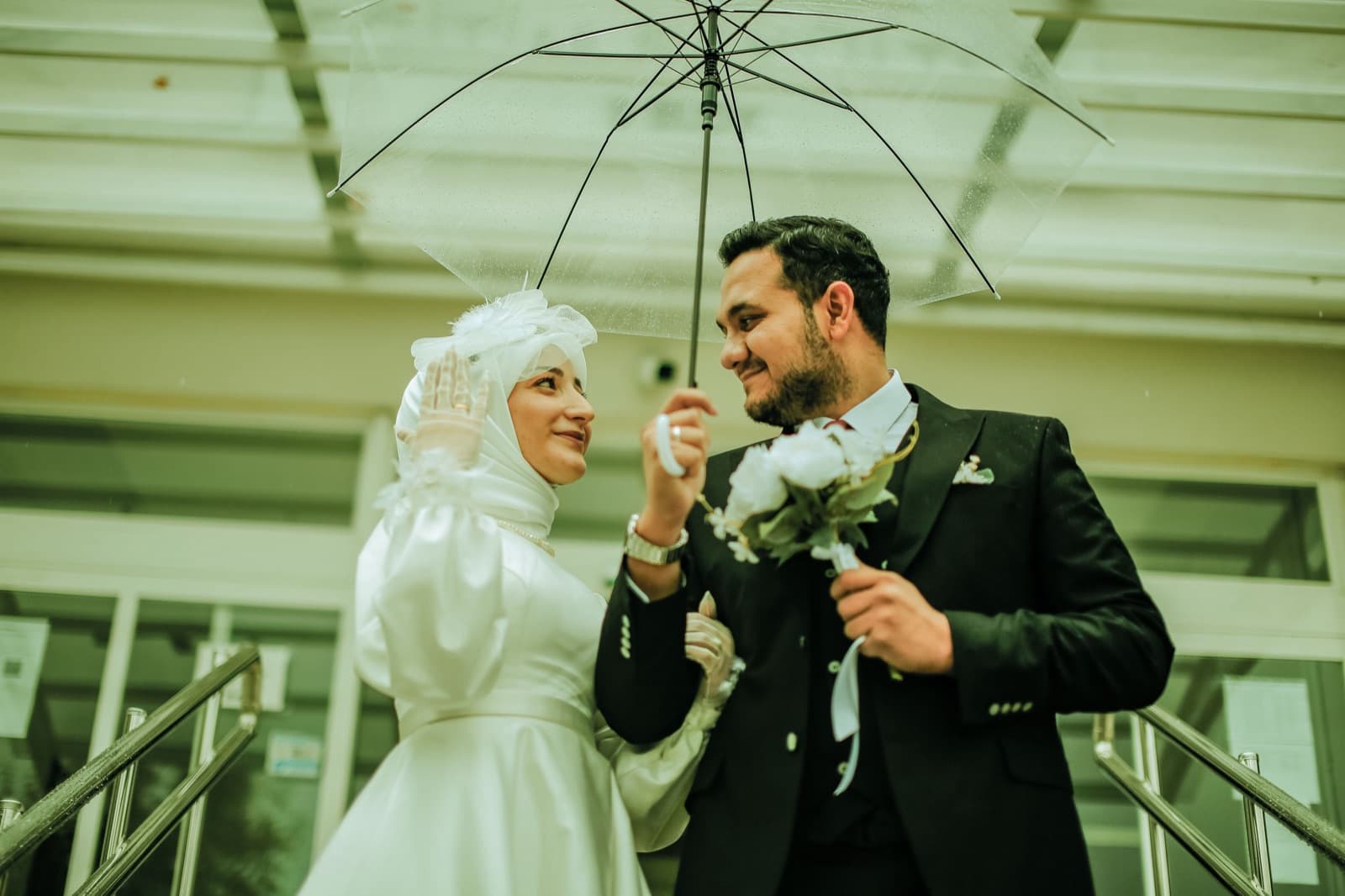
- Umbrellas. A basket of large plain ones by the door. They photograph well, which the multicoloured golf umbrellas from the boot of somebody's car emphatically do not.
- Somewhere to put wet coats. Sounds trivial. Is not, when ninety people arrive damp.
- Tell people what to expect. One line on the website — "the ceremony is outdoors on grass" — lets guests bring the right shoes. Nobody enjoys a field in the wrong footwear.
- Warn your photographer. They will bring different lenses and know the covered spots. Ask to see wet-weather work; the good ones have plenty and are quietly pleased to be asked.
Make the call early, and hand it to someone else
Set the decision point in advance — a specific time on the morning, or the night before if the setup requires it. Then give the decision to your coordinator, your venue, or a very level-headed friend, with a simple instruction: they decide, they tell you what is happening, and you do not get a vote.
This sounds like a strange thing to give away. It is the single kindest thing you can do for yourself. Standing in a room at nine in the morning refreshing a forecast, being asked repeatedly what you want to do, is a genuinely miserable way to start a wedding day. Someone else holding it means you find out over breakfast that today is the indoor one, and then you get on with getting married.
And if it rains anyway
Weather is one of the very few things at a wedding that nobody can blame you for, which makes it oddly freeing. Guests do not judge a couple for rain. They take their cue from you, and if you are visibly having a good time in a room that smells faintly of wet coats, so is everyone else.
The photographs, for what it is worth, are often better. Flat grey light is kind to faces, and there is no wedding picture quite like a hundred people crammed under a porch, laughing at the weather.