Ask three florists for "something loose and natural, mostly white, with a bit of greenery" and you can get three quotes that differ by a factor of three. Not because two of them are overcharging, but because that brief describes a look rather than an amount, and flowers are priced by amount.
Understanding what moves the number is the difference between a disappointing compromise and getting most of what you wanted.
The four things that set the price
Stem count. The single biggest factor, and the one hidden by describing a style. "Loose and natural" done properly often uses more stems than a tight structured arrangement, because the airiness comes from volume, not from gaps. A full, abundant look is expensive in a way a neat one is not.
What the flowers are, and whether they are in season. Peonies in October are imported and priced accordingly. The same money in June buys three times as many. Some flowers are expensive whenever you buy them — garden roses, orchids, lily of the valley — and some are cheap and unfairly overlooked.
Labour. Wiring individual blooms, conditioning stems the night before, hand-tying a bouquet properly: this is skilled work measured in hours. An arrangement that looks effortless usually took longer than one that looks arranged.
Installation. Anything hanging, arching or attached to a structure needs mechanics, ladders, time on site, and often a second visit to take it down. An arch is not a big bouquet. It is a small construction project with flowers on it.
Where the money goes furthest
Flowers are seen at close range for a long time in some places, and glanced at in others. Spend accordingly.
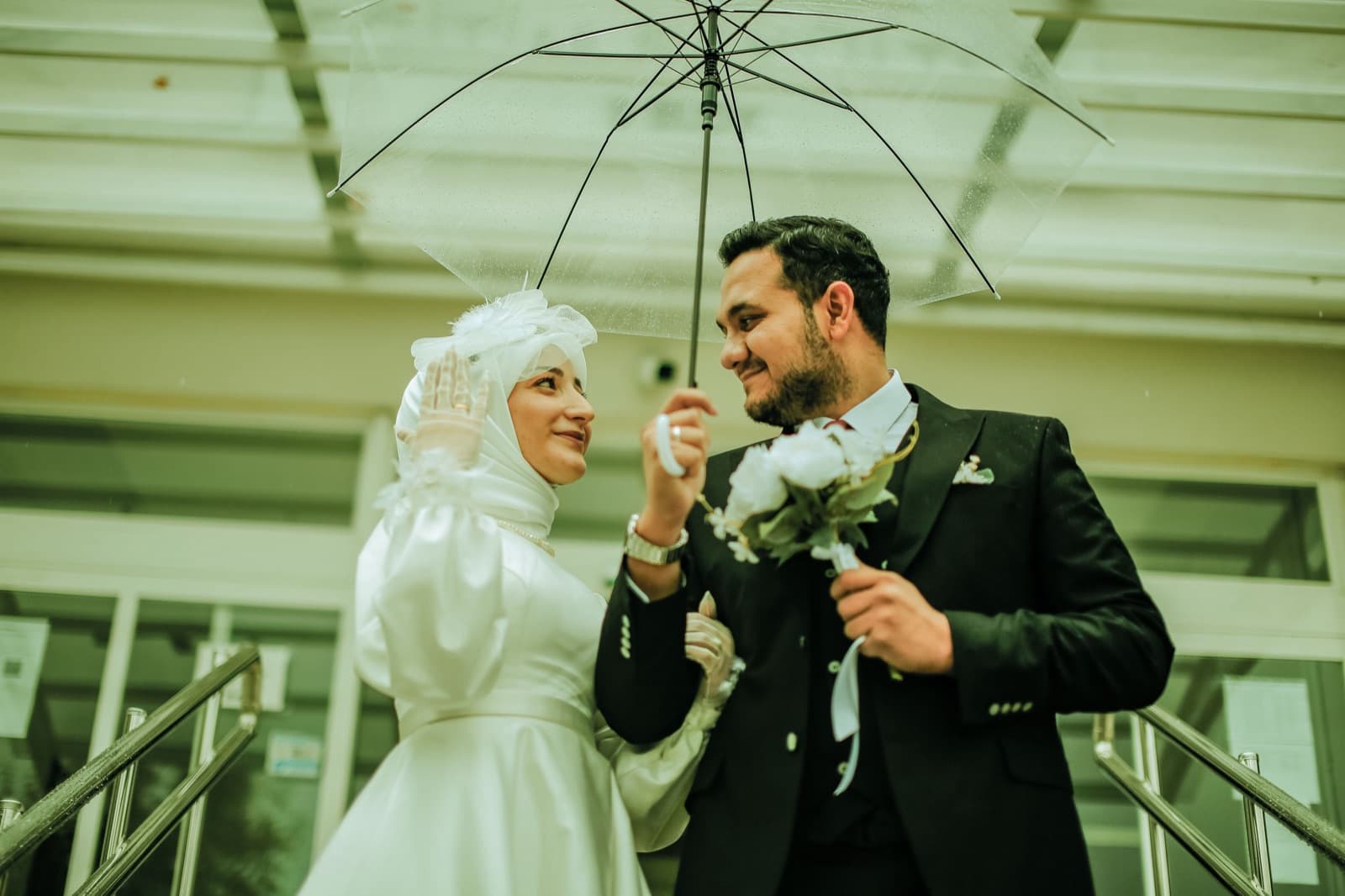
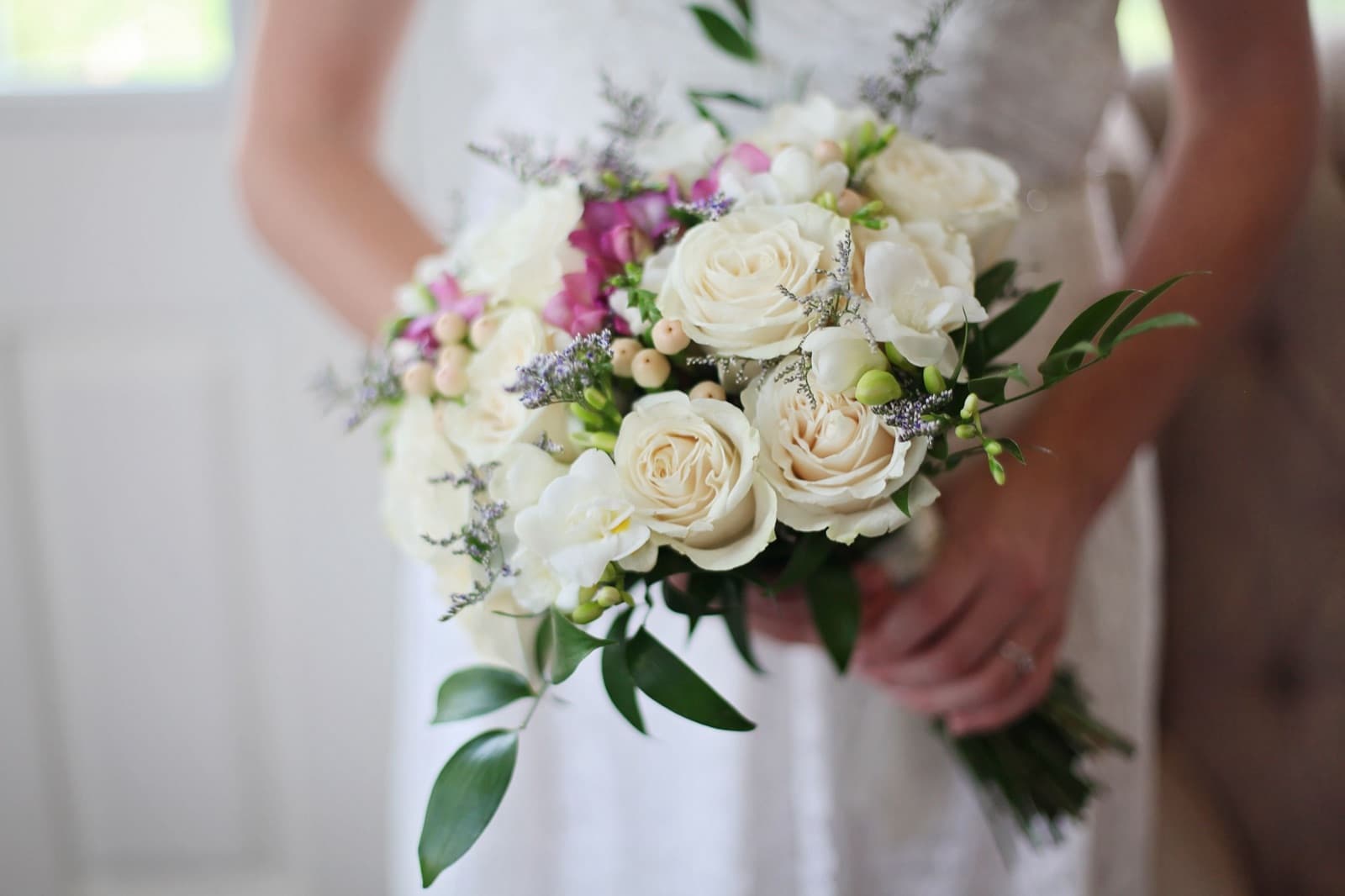
- The bouquet. Photographed constantly, held at chest height in every portrait, and carried down the aisle. This is the one to spend on.
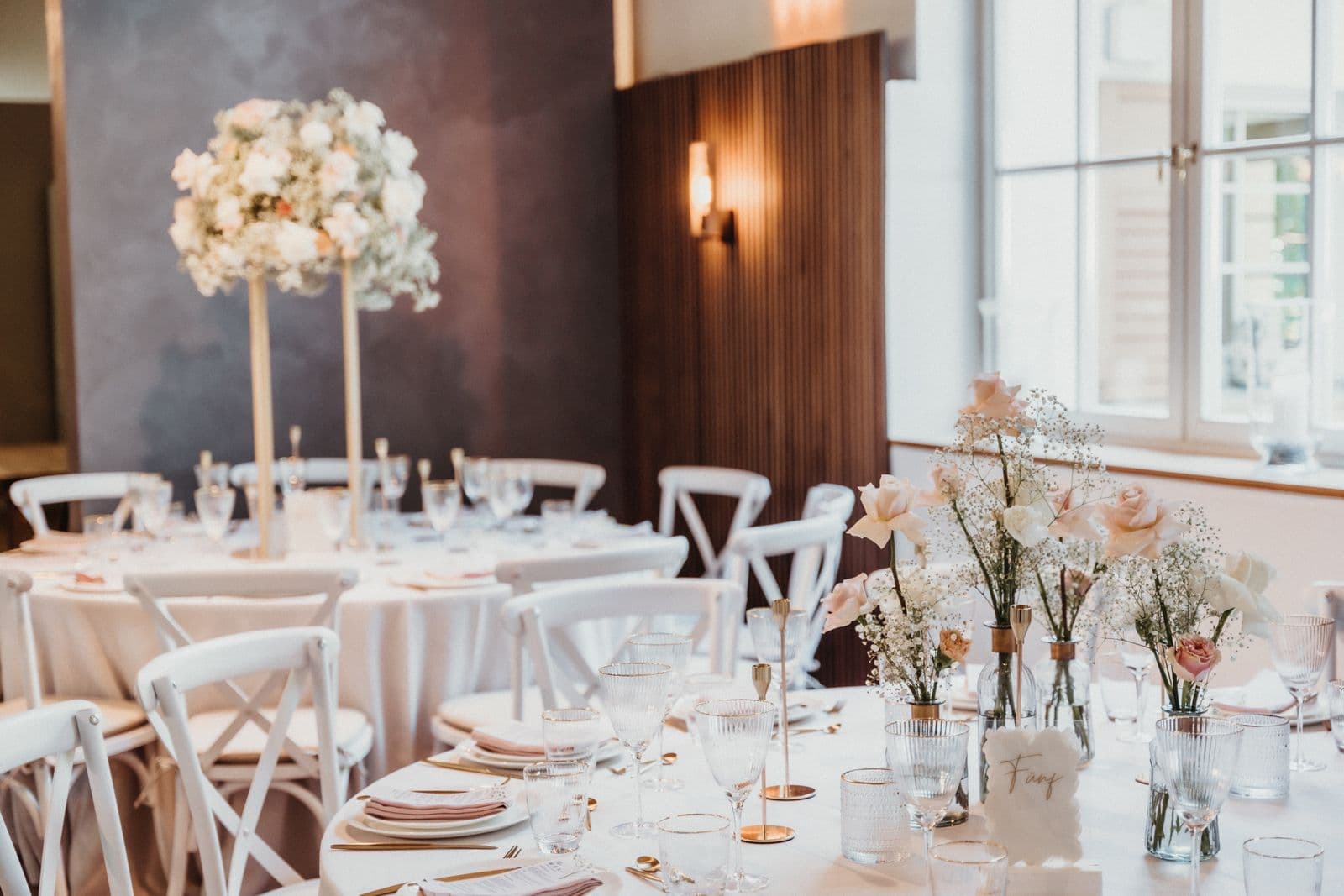
- Table centres. Guests look at these for two hours. Worth doing properly, though not necessarily expensively — see below.
- The ceremony backdrop. Seen by everyone, in every ceremony photograph. Concentrated impact.
- Everything else. Pew ends, cake flowers, loose petals. Nice, rarely noticed, first to cut.
The moving trick
Ceremony arrangements are used for perhaps thirty minutes and then abandoned. If the ceremony and reception are in different rooms, ask your florist to move them: aisle arrangements become the top table, the ceremony backdrop becomes a photo backdrop or frames the cake.
It costs a little labour and saves buying a second set of flowers. Most florists will suggest it themselves; the ones who do not are usually assuming you would rather not have staff moving things during the drinks reception, so say that you would.
How to brief properly
Bring pictures, but bring them honestly. A single image of an installation that cost four thousand pounds is not a brief, it is a wish. Better to bring several images and say what you like about each — the colour, the looseness, the fact it is low enough to see over.
Then give the florist three things they can actually work with:
- Your budget, as a real number. Withholding it does not get you a better price; it gets you a proposal you cannot afford and a second meeting.
- What matters most. If the bouquet is the thing, say so, and let them economise elsewhere.
- What is fixed. Table sizes and shapes, ceiling height, whether anything can be attached to the walls, and what the venue prohibits.
A good florist given a real budget and a clear priority will get you further than one given a mood board and a vague sense that you would like it to look expensive.
Things that quietly cost more
- All-white. Counterintuitive, but white flowers show every blemish, so more are rejected and the good ones cost more.
- Tall centrepieces. They need substantial vessels, more stems to look right at height, and often weighting so they do not go over.
- Very specific colours. "Blush" covers a wide range; matching a precise swatch narrows the field to whatever is available that week, at whatever it costs.
- Delivery to two sites, or a venue with a long carry from the car park.
What to ask before booking
- What happens if a specific flower is unavailable that week? Every florist has substitutions; you want to know they will be in keeping.
- Is setup and takedown included, and when do they access the venue?
- Who removes everything afterwards, and when? Some venues charge if it is not gone by a certain hour.
- Can guests take arrangements home? A lovely end to the night, but it needs agreeing with whoever owns the vases.
That last point is worth planning for rather than improvising. Thirty guests carrying centrepieces to their cars is charming. Thirty guests carrying the venue's hired glass vases to their cars is an invoice.