Planning tips
Giving notice of marriage in the UK: when, where and what to bring
Before you can legally marry you have to tell a registrar, and the rules differ in England and Wales, Scotland and Northern Ireland. The dates, the forms and what to bring.
6 min read
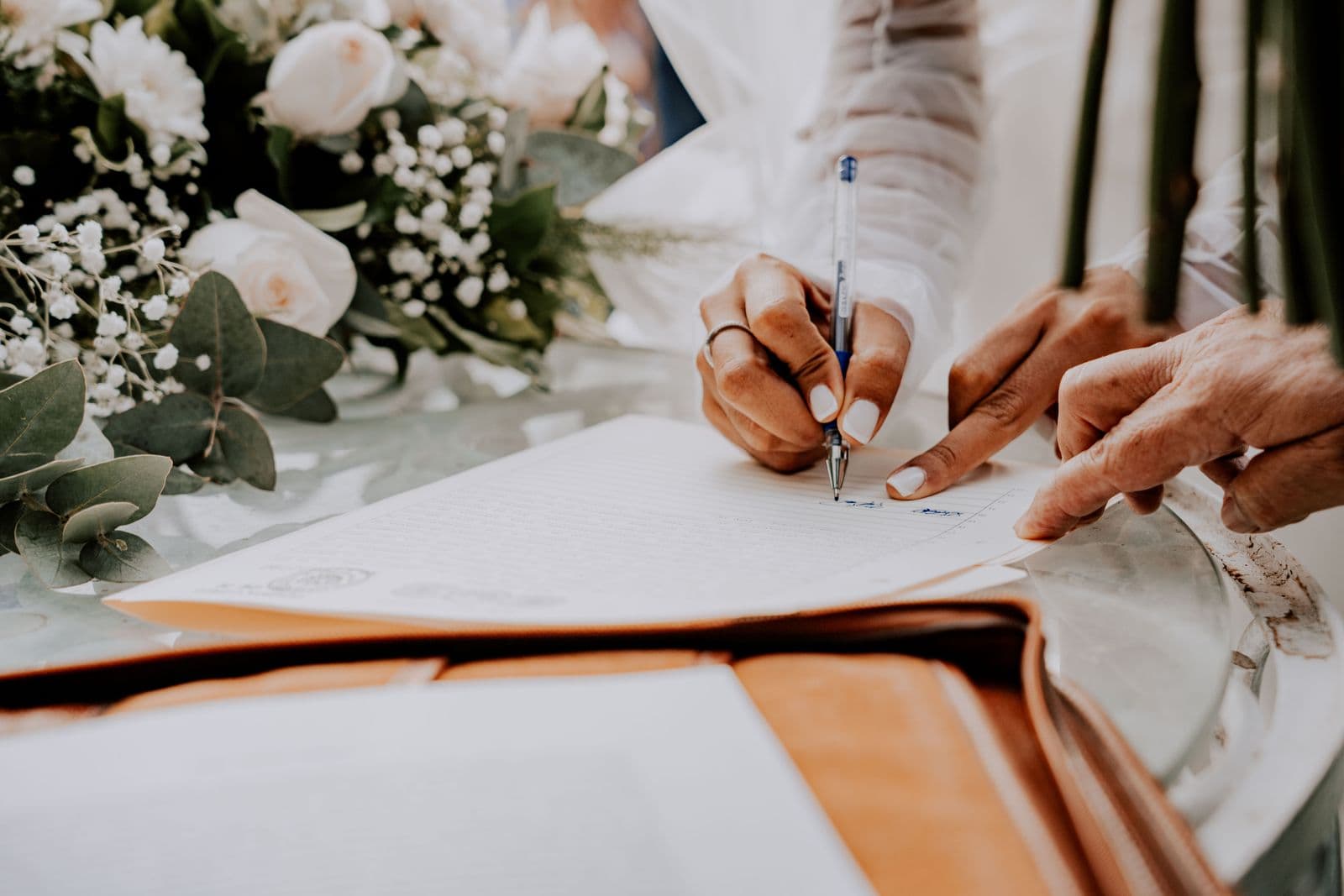
Most of the wedding is about choices. This part isn't. Before you can legally marry anywhere in the UK, you have to tell a registrar first, and the dates are fixed by law. Miss them and the wedding can't legally go ahead on the day you've booked.
It's not difficult, but it catches couples out for two reasons: the rules are different in England and Wales, Scotland and Northern Ireland, and the window opens and closes at times that don't match the rest of the planning. Here's what to do in each, and when.
The short version
- England and Wales: give notice in person at your local register office, no earlier than 12 months and at least 29 days before the wedding.
- Scotland: send marriage notice forms (M10) to the registrar where you're marrying, at least 29 days before. National Records of Scotland suggests 10 to 12 weeks before.
- Northern Ireland: send marriage notice forms (GRO 446) to the registrar where you're marrying, within the 12 months before and at least 28 days before. They suggest around 8 weeks before.
That 28 in Northern Ireland isn't a typo. It's the one place the minimum is a day shorter.
England and Wales
Here it's called giving notice. Each of you signs a legal statement at your local register office, usually by appointment. "Local" means the registration district you've lived in for at least the last seven days, so if you live apart you may each go to a different office, on different days.
The notice records where you're getting married, so book your ceremony venue first. Then the timing:
- The wedding has to take place within 12 months of giving notice, so there's no point going earlier than a year out.
- It has to be at least 29 days before the ceremony. Give notice on 1 May and the earliest you can marry is 30 May.
- GOV.UK doesn't suggest a date to aim for. Around three months before leaves time if a document needs sorting.
Take the originals of:
- your passport, or UK birth certificate (if you were born after 1 January 1983 and use a birth certificate, you'll also need evidence of your parents' nationality)
- proof of address, such as a recent utility bill or bank statement
- proof of any change of name
- a decree absolute or final order, or a death certificate, if either of you has been married or in a civil partnership before
If either of you isn't a British or Irish citizen, you'll usually need to give notice together, and it can take longer: the register office may need to refer it to the Home Office, which can stretch the notice period to 70 days. Check the GOV.UK guidance early if this applies to you.
Church of England and Church in Wales weddings can work differently, through banns or a licence arranged with the church, so ask your vicar before booking a register office appointment.
Since May 2021 there are no paper registers at the ceremony. Instead there's a marriage schedule, signed on the day and then registered electronically. If a registrar is marrying you, they deal with it. For a religious ceremony, make sure the schedule reaches whoever is conducting it on or before the day. Certificates aren't handed over at the ceremony: you order one from the register office afterwards.
Scotland
In Scotland you submit notice, and you don't have to go anywhere in person. Each of you completes and signs a marriage notice form, the M10, and between you one celebrant and witness form. They go to the registrar for the district where the ceremony is, not where you live. It's £45 each.
- The registrar must have them at least 29 days before the wedding.
- National Records of Scotland recommends sending them 10 to 12 weeks before.
- Don't send them too early either. Notice can lapse if it's given much more than three months ahead, so if you're early, check with your registrar first.
With the forms you'll need your birth certificates, proof of address from the last three months, your passports, and a divorce decree or death certificate if either of you has been married before. If either of you has lived in the UK for less than two years, you'll also need a certificate of no impediment.
Scotland lets religious and belief celebrants, including humanist ones, marry you, as long as they're authorised: check with your registrar. Booking the celebrant isn't the same as giving notice, though, so you still send the forms.
For a religious or belief ceremony, one of you collects the Marriage Schedule from the registration office, no earlier than seven days before the wedding, and gives it to your celebrant. It's signed straight after the ceremony by both of you, the celebrant and two witnesses aged 16 or over, in black ink, and has to be back with the registrar within three days. At a civil ceremony, the registrar brings it.
Northern Ireland
In Northern Ireland each of you sends a marriage notice form, the GRO 446, to the registrar for the district where you're marrying, in person or by post. It's £22 a form.
- It has to arrive within the 12 months before the wedding, and at least 28 days before.
- The suggested timing is about 8 weeks before, or 10 weeks if either of you has been married or in a civil partnership before.
- Without the right visa or evidence, notice can be extended to 70 days.
Bring your full birth certificates and passports, and a decree absolute or death certificate if you've been married before. For a religious or belief ceremony, talk to your officiant first: they sign one of the forms. Your schedule can be issued in English, Irish or both, chosen on the form, and that can't be changed later.
For a religious or belief ceremony, the schedule can't be issued more than 14 days before the wedding, and one of you has to collect it yourselves. A friend or relative can't do it for you. It's signed after the ceremony and returned to the registrar within three days.
Put the dates in now
The easiest way to get this right is to work the dates out the day you book your venue: the earliest you can give notice, the date to aim for, and the last possible day. Then forget about it until the first one comes round.
If you're planning with PlanHitch, that's done for you. The legal bit on your overview works out each step from your wedding date for the nation you're marrying in, moves the dates if the wedding moves, and emails you before giving notice is due. Every step links to the official guidance.
Whichever way you keep track, your registrar has the final say. If anything about your situation is unusual, ring them early. They'd much rather hear from you in March than in May.
Checked against GOV.UK, National Records of Scotland, mygov.scot and nidirect in October 2026. Fees and procedures can change, so check the official pages before you book.
Filed under
- legal
- giving notice
- register office
- scotland
- northern ireland